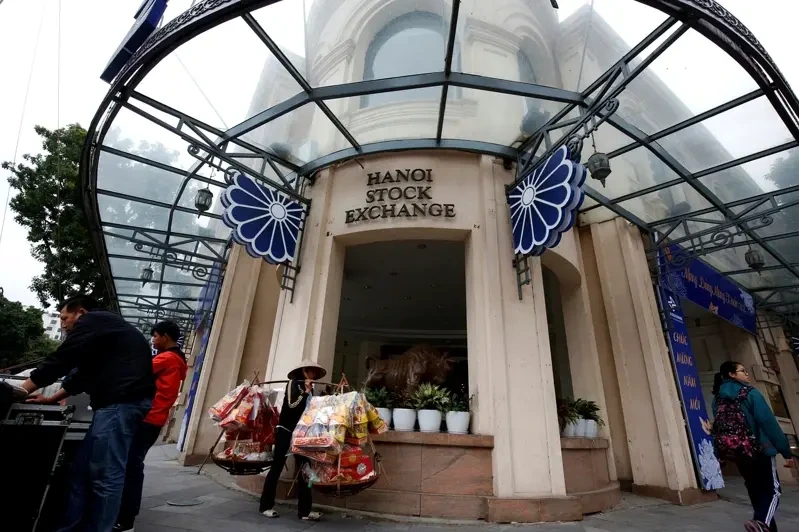
Vietnam’s stock market was officially included in the FTSE Russell Secondary Emerging Market index on Monday, concluding a long upgrade process that began in 2018. FTSE Russell estimates that this adjustment could attract up to $6 billion in capital to Vietnam. However, foreign ownership limits, insufficient free-float shares, and the absence of AI supply chain themes—features present in markets like Taiwan and South Korea—may still constrain subsequent capital inflows.
Vietnam’s upgrade from “Frontier Market” to “Secondary Emerging Market”—placing it alongside China and India—helps local companies expand their fundraising channels and is expected to bolster the government’s goal of achieving 10% economic growth.
FTSE Russell will phase in the weighting of Vietnamese stocks over four stages: an initial 10% inclusion in September, followed by an increase of 20% in March 2027, and further increases of 35% each in June and September of that year.
FTSE Russell announced that 27 companies listed on the Ho Chi Minh City Stock Exchange qualify for inclusion in its Global Equity Index Series and related indices. These eligible companies are predominantly from the banking and securities sectors but also include Vingroup—Vietnam’s largest private enterprise—and real estate developer Novaland.
Thomas Nguyen, Head of Global Markets at SSI Securities, believes that after the initial excitement, market trading activity may cool down again before picking up as the 2027 milestone approaches. The next phase of inclusion, scheduled for March of next year, involves a higher weighting and is expected to have a more pronounced impact on the local market.
Duncan Burns, Head of Asia-Pacific Investment Management and Global Equities at Vanguard Australia, stated that Vanguard intends to hold Vietnamese assets for the long term as long as the country remains in the FTSE indices. The removal of the requirement to pre-fund stock purchases has also made it easier for international investors like Vanguard to enter the market.
In recent years, Vietnam has also launched the KRX trading system—developed jointly with the Korea Exchange—to improve stock market infrastructure. Additionally, it established a system allowing foreign investors to place orders with Vietnamese brokers through existing international brokerage firms, eliminating the need to open separate local accounts. These reforms were pivotal to Vietnam securing the upgrade.
However, an upgrade to emerging market status does not guarantee a massive influx of capital. Peter Stein, CEO of the Asia Securities Industry & Financial Markets Association (ASIFMA), noted that foreign ownership restrictions and the limited availability of tradable shares in certain stocks still make it difficult for many investors to actually purchase shares in the companies they favor.